Your Cart is Empty



The most overlooked four inches of your kitchen might actually be the most essential for your daily comfort. While it's easy to focus on the luster of glossy white cabinets or the texture of oak finishes, the cabinet toe kick is the unsung hero that bridges the gap between structural necessity and high-end design. You likely already know the frustration of leaning over a counter that feels just a bit too far away, or seeing an unsightly gap where your beautiful cabinetry meets the floor. It's a common pain point that can turn a dream kitchen into a source of physical strain and visual clutter.
We're here to help you solve those ergonomic and aesthetic challenges with precision. In this guide, you'll discover how to select, measure, and match toe kicks to create a seamless, professional finish that protects your back and simplifies floor maintenance. We will walk through everything from standard ANSI dimensions to modern design trends like matte finishes and natural wood accents. By the end, you'll have the technical clarity needed to ensure your kitchen feels stable, dependable, and perfectly tailored to your lifestyle.
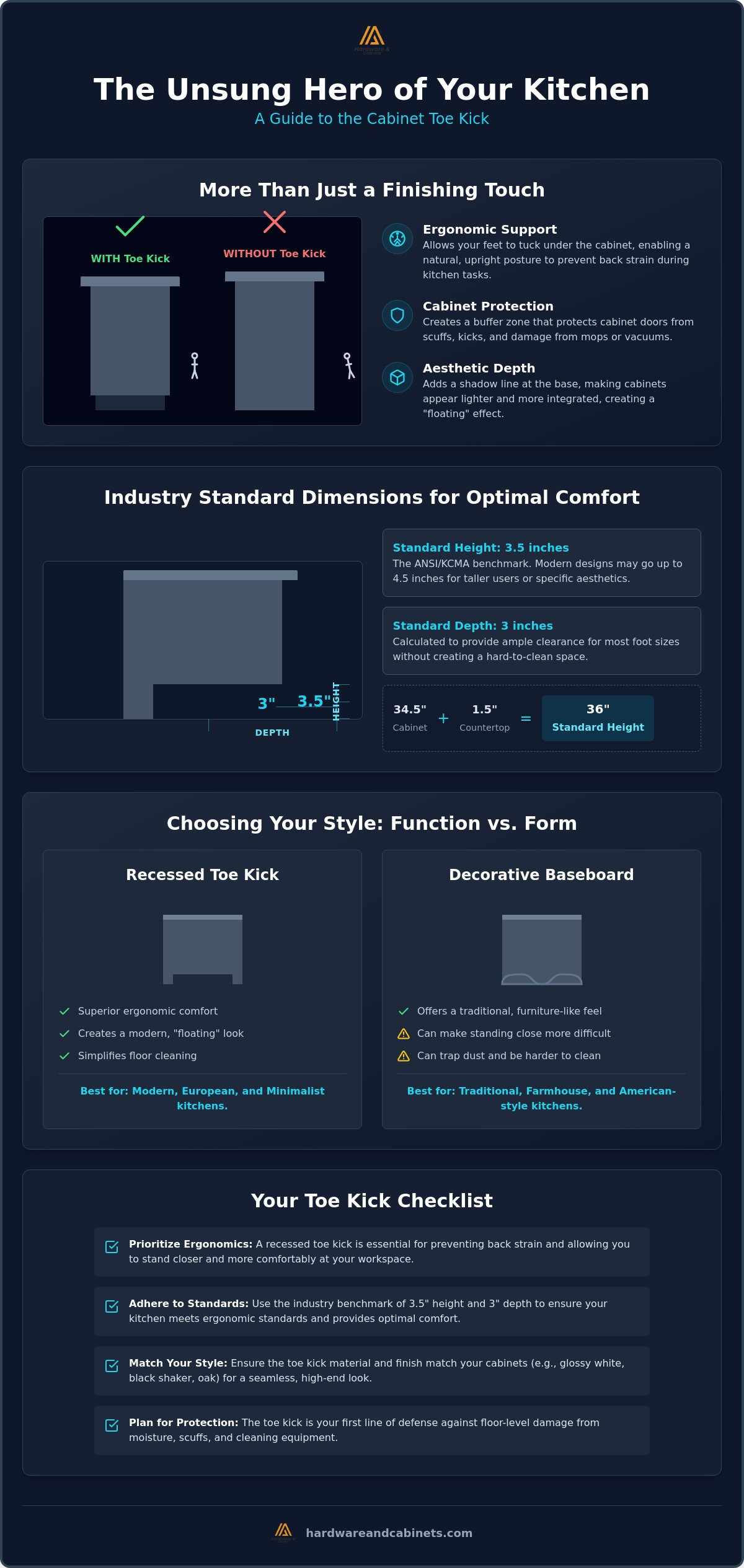
The cabinet toe kick is the intentional notch found at the base of your kitchen or bathroom cabinets. While it might look like a simple design choice, it serves a critical functional role. This recessed area, often referred to as a Kick space (toe kick), allows your feet to tuck under the cabinet's edge, bringing you closer to the countertop. Without this space, you would be forced to lean forward, putting unnecessary stress on your lower back during everyday tasks.
Beyond the physical comfort it provides, this feature acts as a protective shield for your investment. It creates a vital buffer between high-traffic floor areas and your cabinet doors. Whether you've chosen elegant oak cabinets or sleek glossy white cabinets, the recessed base prevents shoes, vacuum cleaners, and mops from scuffing the primary finish. It's the difference between a kitchen that looks worn within a year and one that maintains a professional, built-in appearance for decades. A well-planned base ensures your kitchen remains both durable and visually cohesive.
Standing at a counter for long periods can be taxing on the body if the environment isn't designed correctly. A standard cabinet toe kick provides a recess that is typically between 3 and 4 inches high. This small architectural detail allows you to maintain a neutral spine while prepping meals or washing dishes. If the cabinets were flush with the floor, your toes would hit the base, forcing your torso to tilt forward to reach the work surface. This awkward angle is a leading cause of fatigue in the kitchen.
Small adjustments in these dimensions can have a large impact on your daily comfort. Proper posture depends on being able to stand with your weight centered over your feet rather than shifting it forward. The industry ergonomic standard is a 3.5-inch depth for optimal posture. This specific measurement ensures that almost any user can work comfortably without the constant need to adjust their stance or lean into the counter for balance.
Homeowners often face a choice between a standard recessed kick and a decorative baseboard. A recessed kick creates a lighter visual weight, making the cabinets appear as if they are floating. This is particularly effective in modern designs using glossy gray cabinets or European styles. It also makes floor maintenance much simpler. You can easily run a mop or vacuum along the recess without hitting decorative trim or trapping dust in intricate carvings.
Decorative baseboards or valances offer a more furniture-like feel that suits traditional styles. These are common in many American style kitchens where a heavy, grounded look is desired. However, these decorative elements can make it harder to stand close to the counter for extended periods. If you choose a decorative valance, you might sacrifice some of the ergonomic benefits for a specific historical look. Balancing these practical needs with your design goals is key to a kitchen that is both beautiful and functional.
Precision is the foundation of any high-quality kitchen build. When you plan a cabinet toe kick, the goal is to balance ergonomic comfort with a clean, architectural line. Standard dimensions are not merely suggestions; they are calculated to accommodate the average human foot while maintaining the structural integrity of the base cabinet. Getting these measurements right ensures that your kitchen feels as good as it looks. It provides a stable foundation for your daily activities.
As of July 2026, the ANSI/KCMA standard for a kitchen cabinet toe kick is 3.5 inches in height and 3 inches in depth. This depth is specifically designed to provide enough clearance for most foot sizes without creating a deep cavern that is difficult to clean. While the 3.5-inch height is the technical benchmark, many modern manufacturers provide kicks up to 4.5 inches to allow for taller users or specific design preferences. This choice directly impacts the total counter height. Standard base cabinets are 34.5 inches tall. When you add a 1.5-inch countertop, you reach the standard 36-inch work surface height.
Adjusting for the realities of home construction often requires more than just following a blueprint. Floors are rarely perfectly level. You might need to use shims or scribe the toe kick material to the floor to maintain a straight line across a long run of cabinets. European style cabinets often differ from American styles by using adjustable plastic legs instead of a solid box base. These legs are hidden behind a clip-on kickboard, which can be taller than the American standard and easier to adjust on uneven surfaces. For homeowners prioritizing accessibility, ADA-compliant designs require a much larger recess. These must be at least 9 inches high and 6 inches deep to accommodate wheelchair footrests.
The area at the base of your cabinets is the most vulnerable to moisture and physical impact. Every time you mop the floor or run a vacuum, the toe kick takes the brunt of the activity. Plywood is a preferred choice for its structural stability and resistance to swelling. MDF is another common option, especially when a perfectly smooth finish is required for glossy white cabinets or glossy gray cabinets. However, in high-moisture zones, solid wood or high-quality plywood provides better longevity against water damage.
Selecting the right material ensures that your kitchen maintains its beauty despite the rigors of daily use. If you're unsure which material or finish best matches your project, ordering refundable sample doors can help you verify the quality before committing to a full installation. This step provides peace of mind that your finish will withstand mopping, vacuuming, and everyday kicks for years to come.
A kitchen's aesthetic success often depends on the details that go unnoticed at first glance. While we've established the structural and ergonomic benchmarks, the visual integration of the cabinet toe kick determines whether your cabinetry looks like a custom installation or a collection of separate boxes. The right choice bridges the gap between your flooring and your cabinet faces, creating a cohesive narrative of style and precision.
Achieving a high-end, modern look with glossy white cabinets or glossy gray cabinets requires strict attention to light reflection. Because these finishes are designed to bounce light around the room, any mismatch in the sheen of your toe kick will be immediately apparent. You want to avoid visual breaks that disrupt the monochromatic flow of the kitchen base. Using matching high-gloss panels ensures the cabinetry appears as a single, continuous unit from the countertop to the floor.
Maintenance is a specific consideration for these reflective surfaces. Since toe kicks are positioned at floor level, they are prone to scuffs from shoes and vacuum cleaners. To keep your high-gloss finishes looking pristine, avoid abrasive cleaners. A simple damp microfiber cloth is usually enough to remove dust and maintain that mirror-like luster without scratching the surface. This careful approach preserves the long-term value of your investment.
Shaker cabinets offer a timeless appeal that works across various design languages. For black shaker cabinets, a matching black toe kick provides a grounded, architectural foundation that emphasizes the bold color choice. This creates a solid block of color that feels intentional and sturdy. In contrast, when working with slim shaker cabinets, you might opt for a slightly deeper recess to accentuate the thin, modern profiles of the door frames. This extra shadow helps the cabinetry feel lighter and more contemporary.
Natural wood finishes, such as those found in oak cabinets, require a different approach. The goal here is to match the grain and texture as closely as possible to ensure the warmth of the wood isn't interrupted. A well-matched wood toe kick makes the cabinetry feel like a piece of fine furniture. While some designers experiment with contrasting colors at the base to make a statement, most high-end projects favor a unified look that allows the door styles to remain the primary focus of the room.
In European style cabinets featuring flat panel cabinet doors, the toe kick often plays a more functional role in the minimalist aesthetic. These designs frequently use a recessed kick that is set back slightly further than the American standard. This creates a deeper shadow line, making the heavy base units appear to hover above the floor. This floating effect is a hallmark of modern design, emphasizing clean lines and uncluttered spaces.
The transition from design concepts to physical installation requires a methodical approach to measurement. A successful cabinet toe kick installation isn't just about covering a gap; it's about finishing the kitchen with precision. Before you make your first cut, you must calculate the total linear footage of the cabinet runs. It's a standard professional practice to add 10% to this total to account for miter cuts and potential waste. This buffer ensures you don't run short during the final stages of your project and gives you room to correct any minor errors.
Preparation also involves checking the site conditions. Floors are rarely perfectly flat, and walls are often out of square. By identifying where end panels terminate and where corner transitions occur, you can plan your cuts to minimize visible seams. Gathering the right tools before you begin will save time and frustration. You'll need a miter saw capable of making precise 45-degree cuts for external corners. A brad nailer with 1-inch or 1.25-inch nails is essential for attaching the kickboard to the cabinet base without leaving large, unsightly holes. For a truly professional result, use a high-strength construction adhesive on the back of the boards to provide a secondary bond that prevents warping over time.
Measuring for a toe kick involves more than a quick tape pull. For internal corners, measure from the back of the recess to the adjacent cabinet face. For external corners, you'll need to account for the thickness of the material itself to ensure the miter joint closes tightly without gaps. Don't overlook appliance gaps; while you won't install a kick across a dishwasher, you must finish the cabinet edges on either side to maintain a polished look. Blind corners, where two cabinets meet at a right angle but one is partially hidden, require careful planning to ensure the kickboard doesn't interfere with adjacent drawer operation. Measurements should be taken at the floor level to account for wall irregularities.
If you notice a gap between the bottom of your cabinet and the floor, scribing is the solution. Scribing is the process of transferring the uneven profile of the floor onto the toe kick board so it can be trimmed for a perfect fit. This technique is what separates a DIY look from a professional artisan finish. You'll need a simple compass or a dedicated scribe tool to trace the floor's contour onto your material. This ensures that even if your floor dips or rises, the top edge of your kickboard remains perfectly level with the cabinet base.
Once the line is marked, use a jigsaw or a plane to trim the bottom edge of the board. This allows the cabinet toe kick to sit flush against the floor, eliminating unsightly light gaps and preventing dust from accumulating under the cabinets. It's a small step that significantly improves the long-term maintenance of your kitchen. If you're ready to start your project with high-quality materials, you can find durable American style cabinets and matching components to ensure your installation looks seamless and professional.
The cabinet toe kick is arguably the hardest-working component of your kitchen. Positioned at the floor level, it sits at the intersection of daily foot traffic and routine floor cleaning. While your upper cabinets remain relatively untouched, this base area faces constant challenges from moisture, dust, and physical impact. Developing a specific care routine ensures that this small but vital detail continues to provide ergonomic support and visual appeal for years to come.
Maintaining the luster of modern finishes requires a gentle touch. High-gloss surfaces, such as those found on glossy white cabinets or glossy gray cabinets, are designed to reflect light beautifully but can show fingerprints and smudges easily. To clean these, avoid abrasive sponges or harsh chemical cleaners that can leave fine scratches. A soft microfiber cloth dampened with a mixture of warm water and a drop of mild dish soap is the safest way to preserve the mirror-like shine.
Natural wood options, including oak cabinets and slim shaker cabinets, require protection from excessive moisture. When you mop your floors, be careful not to let standing water pool against the base of the cabinetry. This can lead to swelling or delamination of the wood veneer over time. Always dry the surface immediately after cleaning to prevent water from seeping behind the plate. This simple habit protects the structural integrity of your base cabinets and keeps the finish looking vibrant.
Beyond routine cleaning, you should occasionally inspect the seams where the kickboard meets the floor. If you notice gaps developing due to house settling, a small bead of color-matched caulk can prevent dust and pests from accumulating in the recess. If your current base looks worn or water-damaged, replacing the cabinet toe kick is a simple, cost-effective way to refresh your kitchen's appearance without the expense of a full remodel.
We believe that high-quality materials are the foundation of a beautiful home. Our commitment to professional-grade cabinetry ensures that every component, from the largest pantry to the smallest trim piece, is built for resilience. We focus on providing stable, dependable solutions that offer long-term value to our customers. Our products are engineered to withstand the rigors of a functional kitchen while maintaining a timeless aesthetic.
Whether you are installing European style cabinets or traditional American designs, our collection of custom made cabinet doors and cabinet organizers allows you to create a space that is both organized and elegant. We take pride in being a dedicated partner in your home improvement project, offering the precision and durability needed for a successful installation. To find the perfect finishing touches for your kitchen, Explore our full range of cabinetry and accessories.
A successful kitchen renovation relies on balancing high-level design with functional technicality. By understanding the ergonomic necessity of the cabinet toe kick, you've ensured that your new space supports your physical well-being while maintaining a clean, professional aesthetic. We have explored how standard dimensions prevent back strain and how matching finishes, like our glossy gray or black shaker options, creates a seamless visual flow from the counter to the floor. These small details are the hallmarks of quality craftsmanship that stand the test of time.
When you're ready to bring this level of precision to your home, we provide the high-quality materials and expert resources needed for a successful DIY project. Our extensive selection of modern glossy and classic shaker styles is designed for durability and resilience against daily wear. Upgrade your kitchen with premium cabinets and hardware from Hardware and Cabinets to achieve a professional finish you can take pride in for years to come. Your dream kitchen is well within reach.
The industry standard height for a cabinet toe kick is 3.5 inches, though it often ranges between 3 and 4.5 inches. This height is specifically designed to provide enough clearance for your feet while maintaining a standard countertop height of 36 inches. For kitchens designed with accessibility in mind, ADA standards require a minimum height of 9 inches to accommodate wheelchair footrests.
You absolutely need a toe kick for both ergonomic health and the long-term protection of your cabinetry. Without this recessed space, you're forced to lean forward while working at the counter, which leads to significant back strain over time. It also creates a vital buffer that prevents shoes and cleaning equipment from scuffing the delicate face of your cabinet doors during daily activities.
Most homeowners can successfully install a toe kick themselves using basic carpentry tools like a miter saw and a brad nailer. The process involves straightforward linear measurements and simple miter cuts for external corners. While it's a manageable project for most DIY enthusiasts, you should take your time with scribing to ensure a professional, gap-free finish against uneven floors.
Matching your toe kick to your existing cabinetry is best achieved by using specific finish panels or veneers provided by your cabinet manufacturer. If you have glossy white cabinets or oak cabinets, you should use materials with the same sheen and grain pattern to ensure visual continuity. Ordering a refundable sample door can help you verify a perfect match before you purchase full-length boards.
The term toe kick describes the recessed space at the base of a cabinet, whereas a kick plate is the material that covers it. People often use these terms interchangeably in casual conversation. The kick plate serves as the decorative and protective layer that hides the unfinished cabinet base and resists wear from daily foot traffic, vacuuming, and mopping.
You can certainly use a decorative baseboard, though it will change how you interact with your workspace. This "furniture-style" look is popular in traditional American style kitchens where a grounded appearance is desired. However, because the baseboard sits flush with the cabinet doors, you won't be able to stand as close to the counter, which might make food preparation less comfortable over time.
Fixing a cabinet toe kick with water damage usually requires a full replacement of the affected board. Water damage often causes MDF or plywood to swell and delaminate, making a simple surface repair difficult and often ineffective. Ensure the new board is properly sealed on all edges to prevent future moisture from seeping into the core material and causing the same issue again.
A toe kick should almost always match the finish of your cabinets rather than your flooring. Matching the cabinetry ensures that the shadow line remains consistent and the base units look like a single, professional architectural element. While some modern designs use a dark or metallic finish to create a "floating" effect, matching the floor is rarely recommended as it can make the cabinetry look unfinished.