Your Cart is Empty



The most modern kitchen design of 2026 might actually rely on a construction method that's over a century old. While many trends come and go, the structural stability of framed kitchen cabinets remains the gold standard for homeowners who value longevity and precision. You likely want a space that feels high-end and custom, yet the process of ordering online can feel risky. It's natural to worry about the quality of the materials arriving at your door or whether you can manage the assembly of a new system without professional help.
We understand that a kitchen remodel is a major investment, and you need to feel confident in the structural integrity of your cabinet boxes. This guide is designed to help you navigate those choices with ease. You'll discover how to balance timeless American craftsmanship with modern organizational features to create a seamless, functional space. We'll also explore how to use tools like refundable sample doors to visualize finishes like black shaker or natural oak. This ensures your final result looks exactly as you imagined while staying strictly within your budget.
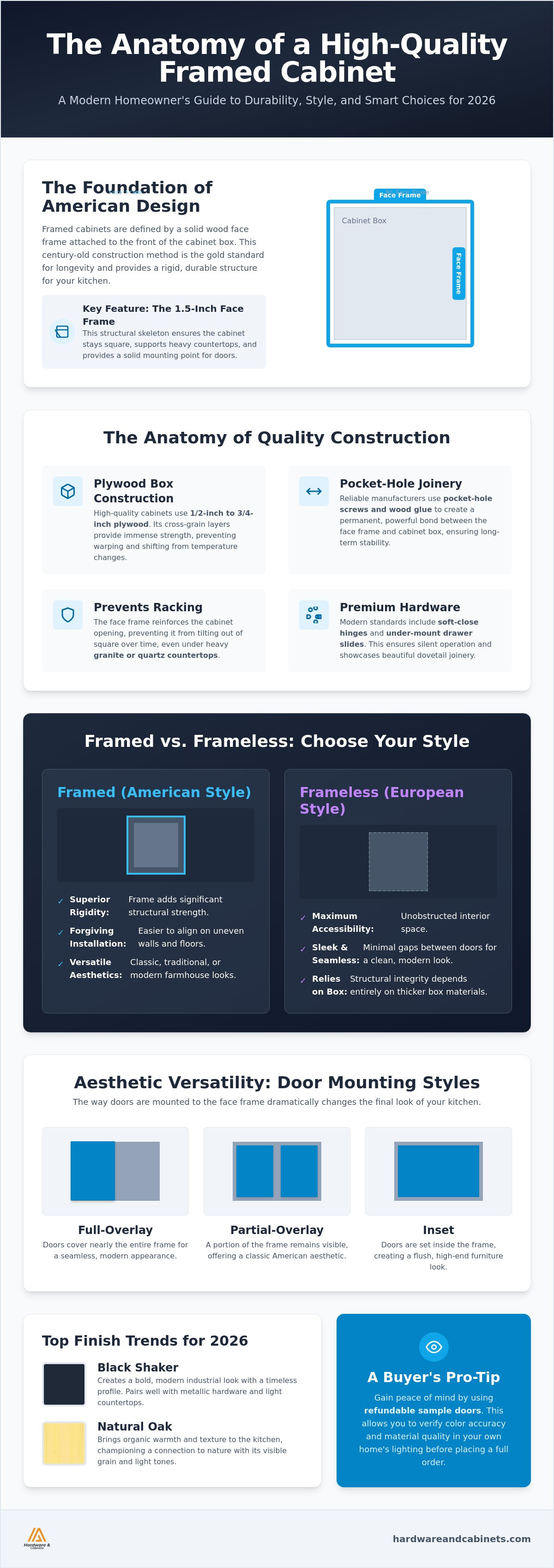
At its core, a framed cabinet is defined by a 1.5-inch solid wood face frame that is securely attached to the front of the cabinet box. This construction method is the hallmark of American-style framed cabinets, providing a distinct look and structural feel that has remained the preferred choice for US homeowners for decades. Unlike frameless designs, the frame acts as a structural skeleton. It gives the entire unit a rigid shape and a finished appearance even before the doors are attached. Choosing framed kitchen cabniets means you are investing in a design that prioritizes long-term resilience over fleeting aesthetic shortcuts.
One of the most practical benefits of this design is its forgiving nature during installation. Most homes, especially older ones, don't have perfectly level floors or plumb walls. The face frame provides enough structural leeway to allow for minor adjustments during the mounting process. This ensures your kitchen looks perfectly aligned even if your walls are slightly uneven. It works because it's simple. This traditional approach offers a sense of stability that is hard to replicate with other methods.
The visible frame does more than just hold the box together; it adds a layer of architectural depth that defines the room's character. Depending on how the doors are mounted, you can achieve vastly different looks. This versatility makes it easy to match your cabinetry with traditional, transitional, or modern farmhouse designs. Whether you're aiming for a cozy, time-worn feel or a crisp, updated look, the frame provides the necessary visual weight to anchor the design. You can choose from several mounting styles:
Durability isn't just about the materials used; it's about how the cabinet handles daily stress. The face frame is essential for preventing racking, which is the tendency of a cabinet box to shift or tilt out of square over time. By reinforcing the front opening, the frame ensures the box stays rigid, even when supporting heavy stone countertops like quartz or granite. This structural integrity is vital for the moving parts of your kitchen as well. The face frame provides a solid wood mounting point for hinges, ensuring doors stay level for years without sagging. This reliable foundation gives you peace of mind, knowing your kitchen will function as beautifully in a decade as it does on day one.
While the face frame provides the aesthetic front, the cabinet box serves as the functional engine of your kitchen. High-quality construction relies on the synergy between the solid wood frame and the materials used for the sides, back, and floor. Professional standards for the industry generally dictate the use of 1/2-inch to 3/4-inch plywood for the box construction. Plywood consists of layered wood veneers glued in alternating directions. This cross-grain pattern creates immense strength and prevents the wood from expanding or contracting significantly with temperature changes. High-quality framed kitchen cabniets utilize this material to ensure the box doesn't warp or shift over time.
The connection between the frame and the box is where many budget options fail. Reliable manufacturers use pocket-hole screws and industrial-grade wood glue to create a permanent bond. This specific joinery technique ensures that the frame won't loosen under the weight of heavy dishware or the daily stress of opening and closing doors. Inside the cabinet, you'll often find a choice between natural wood veneers or easy-clean melamine. Veneers offer a high-end, consistent look that matches the exterior. Melamine provides a smooth, non-porous surface that's exceptionally easy to wipe clean, making it a practical choice for busy households.
In 2026, premium hardware isn't just an upgrade; it's a requirement for a modern home. Soft-close hinges and under-mount drawer slides ensure that your kitchen operates with a silent, heavy feel. Under-mount slides are tucked away beneath the drawer, allowing the beauty of the dovetail joinery to shine while supporting significant weight without sagging.
Kitchens are naturally high-moisture environments. Plywood excels in these conditions because it resists swelling when exposed to occasional spills or humidity. Its superior weight-bearing capacity makes it the only choice for upper cabinets that must hold heavy stacks of porcelain safely. While "Furniture Grade" particle board is a budget-friendly alternative for some, it lacks the long-term resilience found in plywood-based cabinetry. Choosing plywood ensures your cabinets remain structurally sound for decades rather than years.
Soft-close dampers do more than stop noise. They protect the face frame from the repeated impact of slamming doors, which prevents the finish from chipping and keeps the hinges from loosening. It's about quiet confidence. When a door glides shut on its own, it signals a level of precision and care in the manufacturing process. These are standard features to look for in modern framed kitchen cabinets designed for the contemporary home.
If you want to see this structural quality firsthand, you can order refundable sample doors to test the finish and feel the weight of the materials in your own space.
The choice between American and European cabinetry styles often comes down to a balance between tradition and minimalism. While European-style frameless cabinets are known for their sleek, contemporary lines, framed kitchen cabniets remain the definitive choice for the American home. This architectural preference isn't just about looks; it's about structural reliability. Frameless cabinets rely entirely on the thickness of the box for stability. In contrast, the face frame of an American cabinet provides a rigid skeleton that keeps the unit square during and after installation. This extra layer of wood offers a sense of permanence that many homeowners find reassuring.
For many, the deciding factor is installation. Framed cabinets are significantly more forgiving if you're tackling a DIY project. Because the face frame adds rigidity, the boxes are less likely to rack or become distorted when being secured to walls that aren't perfectly level. This stability provides peace of mind for the self-installer, ensuring that doors and drawers align correctly with much less frustration. It's a safer pair of hands for those managing their own remodel.
There's a common myth that choosing a frame means sacrificing significant storage space. While it's true that the clear opening width is slightly narrower in a framed box, modern design has closed this gap. By integrating high-quality cabinet organizers like pull-out spice racks and deep drawer dividers, you can maximize every cubic inch of your cabinet's interior. You can also find popular styles like glossy white cabinets in both constructions. However, the framed version offers a more grounded, classic feel that many find more substantial for a family kitchen.
Framed cabinetry is the undisputed champion of transitional kitchen design. This style blends the warmth of traditional elements with the clean lines of modern aesthetics. Because the face frame is visible, you have more options to customize the look through various door overlays. You can easily mix and match different styles within the same system to create a personalized space that reflects your taste.
From a financial perspective, framed cabinets offer exceptional long-term value. In the US market, buyers often associate the furniture-like quality of framed cabinetry with high-end craftsmanship. This perception can lead to a 70% to 80% return on investment for minor to mid-range kitchen remodels, according to 2026 industry data. Choosing a style that resonates with a broad range of buyers is a smart way to protect your home's resale value while enjoying a durable, beautiful kitchen today.
Selecting a finish is the final step in defining your kitchen's personality. While the structural box provides the strength, the finish determines how your space handles daily life and ambient light. In 2026, we're seeing a shift toward finishes that celebrate texture and depth. Painted finishes remain popular for their crisp, uniform look, especially in transitional spaces. However, stained finishes are experiencing a massive resurgence. Homeowners are moving away from flat colors in favor of the organic warmth found in natural wood grain. This is why oak cabinets have returned to the forefront of high-end design, offering a tactile quality that feels both grounded and sophisticated.
Color choice also plays a psychological role in your home. Black shaker cabinets have become a go-to for those seeking a bold, high-contrast aesthetic that provides an industrial edge. Whether used as an island accent or for the entire layout, these dark tones anchor the room. You must also consider how light interacts with your surfaces. Glossy finishes reflect light, which helps brighten smaller kitchens. Matte finishes absorb light, offering a soft appearance that is excellent at hiding fingerprints and daily wear. Choosing the right finish for your framed kitchen cabniets ensures the space remains beautiful without requiring constant maintenance.
You should never purchase a full set of cabinetry based solely on a digital screen. Colors shift depending on the calibration of your monitor, and the way a finish looks in a showroom rarely matches how it will appear under your specific home lighting. Hardware and Cabinets offers a sample program that lets you see the exact finish in your home’s unique light. By using refundable sample doors, you can hold the material directly against your countertops and flooring. This simple step eliminates the fear of a color mismatch and provides total confidence in your investment before the final order arrives.
Hardware serves as the jewelry of your cabinetry. Because the face frame is a visible part of the design, your choice of pulls and knobs should complement the wood's thickness and style. It's about the details. Ensure your toe kicks match the cabinet finish perfectly to create a seamless look from the floor up. This is also the time to plan your internal storage. Integrating pull-out trash cans and spice racks into your framed layout ensures that your kitchen remains as functional as it is attractive. To start your project with total accuracy, browse our collection of refundable samples and see the quality for yourself.
Selecting a collection is about matching your home's architecture with your personal design personality. For many homeowners, white shaker remains the undisputed champion of resale value. It offers a crisp, clean backdrop that appeals to almost every potential buyer, making it a safe yet stylish investment for any property. If you prefer a bolder statement, black shaker cabinets provide that sought-after industrial edge. These high-contrast designs work exceptionally well in open-concept homes where the kitchen acts as a visual anchor, creating a sophisticated focal point that feels both modern and grounded.
The 2026 market is also seeing a significant move toward the "Naturalist" aesthetic. Oak cabinets are no longer a relic of the past; modern iterations feature light, airy stains that highlight the wood's organic texture. For those who want a minimalist look but refuse to compromise on the strength of framed kitchen cabniets, slim shaker doors are the perfect solution. These doors feature a much thinner profile than traditional shaker styles. This allows you to achieve the sleek appearance typically associated with European cabinetry while maintaining the rigid plywood box construction that defines American craftsmanship.
Choosing RTA framed cabinets is one of the most effective ways to secure a high-end kitchen while remaining within a strict budget. By handling the assembly yourself, you significantly reduce the overall cost of the project without sacrificing material quality. You don't need a workshop full of specialized equipment to get professional results. Most units require only basic tools and a modest amount of time. It's a common concern that RTA units might be less sturdy, but our collections offer the same structural integrity as pre-assembled units. They use the same high-grade plywood and solid wood frames, ensuring your kitchen is built to last for decades.
Before you move forward, precision is your best friend. Take a moment to double-check your measurements for all base and wall cabinets. Even a small error can cause significant delays during the installation phase. We recommend utilizing professional design services to review your layout and ensure every filler piece and toe kick is accounted for. This final layer of scrutiny provides the peace of mind you need for a successful remodel. When you are ready to take the next step, you can browse the full collection of 864+ framed kitchen cabinets here to find the perfect match for your home.
Your kitchen remodel is more than a design update; it's a commitment to the long-term performance of your home. By choosing high-quality framed kitchen cabniets, you are securing a structural foundation that balances traditional American resilience with the latest organizational technology. We have explored how the combination of plywood box construction and solid wood face frames prevents shifting and keeps your space perfectly aligned for years to come.
Whether you're drawn to the industrial edge of black shaker or the organic warmth of natural oak, the key to success lies in the details. You don't have to guess how a finish will look under your specific lighting. With our refundable sample doors, you can verify color accuracy and material quality directly in your space before making a final decision. We provide the tools and expertise you need to ensure your project stays within budget without compromising on craftsmanship.
When you're ready to transform your space, Shop Our Full Collection of Framed Kitchen Cabinets and discover over 800 styles designed for durability. We look forward to helping you build a kitchen that reflects your style and stands the test of time.
The primary difference lies in the construction of the cabinet box. Framed cabinets feature a 1.5-inch solid wood face frame attached to the front of the box, which serves as the mounting point for doors and hinges. Frameless cabinets, often called European-style, lack this frame and rely on thicker side panels for structural stability and door attachment.
Framed cabinets are generally more durable because the face frame acts as a structural anchor that prevents the box from racking or shifting. This reinforcement is especially important when supporting heavy stone countertops. The frame also provides a solid wood foundation for hinges, which ensures your doors stay perfectly level and secure over years of heavy use.
You can absolutely achieve a contemporary aesthetic by choosing full-overlay doors or slim shaker styles. These designs cover the majority of the face frame to create the clean, seamless lines typical of modern kitchens. Using framed kitchen cabniets allows you to enjoy this updated look while benefiting from the traditional strength of American-style construction.
While the face frame slightly narrows the clear opening of the cabinet, the difference in actual storage capacity is minimal for most homeowners. You can easily overcome this by integrating modern cabinet organizers like pull-out pantries or deep drawer dividers. These features ensure you maximize every cubic inch of your cabinet's interior without compromising on structural integrity.
Buying RTA (Ready-to-Assemble) cabinets online provides professional-grade materials at a significantly lower price point than pre-assembled options. You receive the same high-quality plywood boxes and solid wood frames used in custom shops but save on labor and shipping costs. This approach allows you to allocate more of your renovation budget toward premium finishes and high-end hardware.
High-quality framed kitchen cabniets are defined by 1/2-inch to 3/4-inch plywood box construction rather than thin particle board. Look for face frames joined with pocket-hole screws and wood glue, as this ensures the unit remains square for decades. Premium hardware, such as soft-close hinges and under-mount drawer slides, is another reliable indicator of superior craftsmanship.
A face frame is a solid wood structure, typically 1.5 inches wide, that is fixed to the front of the cabinet box. It matters because it provides essential rigidity and keeps the cabinet from twisting during installation on uneven walls. It also creates a finished look for the cabinet front, even when the doors are open, adding to the unit's architectural interest.
Beginners can often manage this installation because the face frame makes the cabinets more rigid and easier to handle than frameless versions. The frame provides a clear, sturdy surface for shimming and securing units together, which helps you maintain alignment on floors that aren't perfectly level. With basic tools and a methodical approach, you can achieve a professional result on your own.